Amos 1
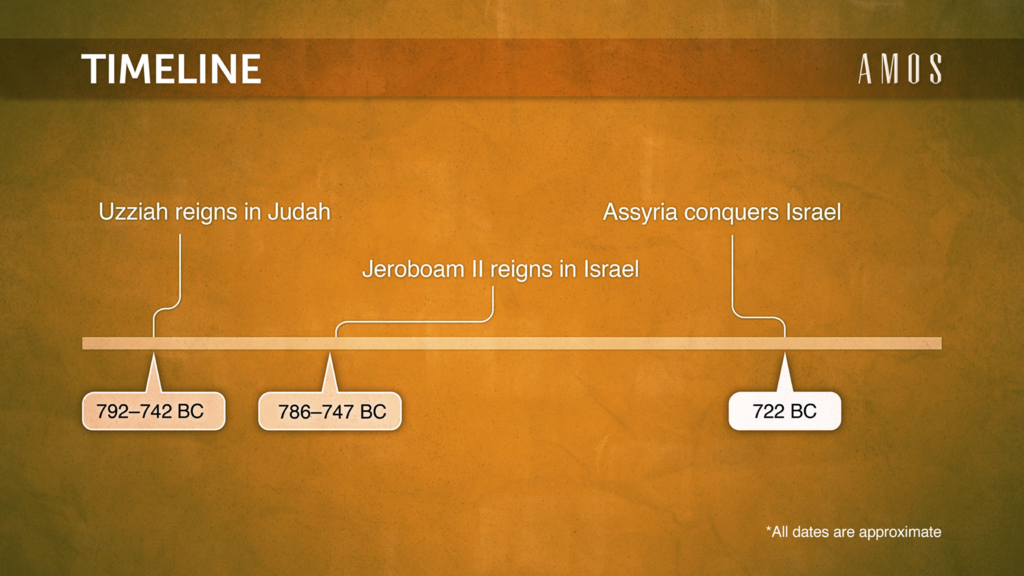
Context and Introduction The study begins by introducing Amos not as a professional prophet, but as a herdsman (shepherd) called by God. The timeline is established as between 793–739 BC. The text notes the division of the nation into two kingdoms: the Northern Kingdom (called Israel, with Samaria as its capital) and the Southern Kingdom (called Judah, with Jerusalem as its capital).
The religious climate is described as compromised. While Solomon’s Temple was in Jerusalem, the Israelites had begun worshiping at "high places," mixing the worship of Yahweh with Canaanite gods like Baal and Asherah. Politically, the violent nation of Assyria was pressing in on Israel and surrounding nations. The chapter references specific kings reigning during this time: Jeroboam II of Israel and Uzziah (also called Azariah) of Judah.
The "Statements of Doom" The core of Amos 1 consists of a series of eight "statements of doom" or oracles against specific cities and nations. This chapter focuses on the pagan neighbors of Israel, holding them accountable for their violence and cruelty.
- Damascus: Cited for violence against Gilead (Israel east of the Jordan River).
- Gaza: A Philistine territory, condemned for their actions against Israel.
- Tyre: Condemned for their collaboration against Israel.
- Edom: Related to Israel (descendants of Esau), condemned for their hostility. The study references Genesis and Numbers to trace the origins of the Edomites.
- Ammon: Cited for brutal violence (specifically ripping open pregnant women in Gilead to enlarge borders, though the summary text implies this via the questions). Their capital is noted as Rabbah (modern-day Amman, Jordan).
Theological Principle The chapter highlights that while these pagan nations believed their actions would have no consequence, God permitted the coming Assyrian conquest as an act of justice for their unrepentant wrongdoing. The text connects these events to the "Day of the Lord," affirming that God is faithful to His Word and that justice is a core attribute of His character.
Study Questions
READ THE ENTIRE CHAPTER OF AMOS 1
- Who was Amos? What was his profession? (v. 1)
- How does the author (Amos) mark the timeline of his vision? (v. 1)
- Read Zechariah 14:5. What does it say about an earthquake? How does this confirm Amos’s message?
- Look up 2 Kings 14:23–27. In the space below, write three things you learn about King Jeroboam II of Israel.
- Look up 2 Kings 15:1–6. In the space below, write three things you learn about King Uzziah of Judah (also called Azariah).
- How does the opening oracle in Amos give authority to what he is about to say? (v. 2)
- Look at Amos 1:3–5. What did Damascus do to Israel (Gilead; east of the Jordan river, in present-day Jordan)?
- What will the consequences of their violence be?
- How does Amos end this “woe” against Damascus? (v. 5)
- Look at Amos 1:6–8. What did Gaza do to Israel? (Gaza was a Philistine territory.)
- What will the consequences of their actions be?
- How does Amos end this “woe” against Gaza?
- Look at Amos 1:9–10. What did Tyre do to Israel? Who did they work with?
- What will the consequences of their actions be?
- Look at Amos 1:11–12. What did Edom do to Israel?
- Look up the following verses about the origins of Edom and record what you find.
- What will the consequences of Edom’s actions be?
- Look at Amos 1:13–15. What did the Ammonites do to Israel? (The Ammonite capital, Rabbah, is the capital of modern-day Jordan, Amman.)
- Look up the following verses about the origins of Ammon and record what you find.
- What will the consequences of the Ammonites’ actions be?
- How does Amos end this “woe” against Ammon?
- What principle about God’s character do you learn from this chapter?
- How will you apply this today?
References
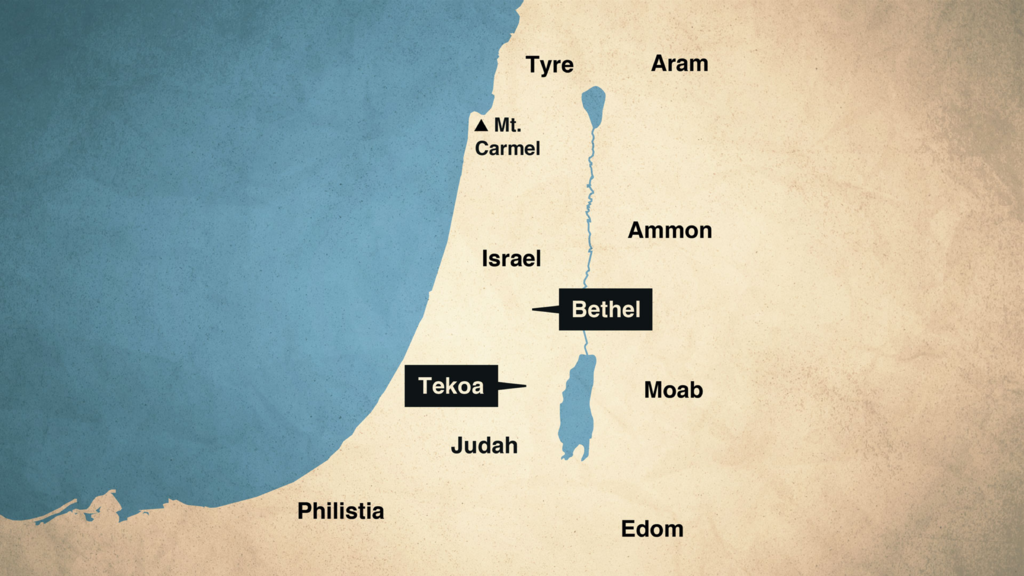
Map
timeline
 Amos 3">